1/5

Dehydrated Horseradish Flakes Wasabi Export to Japan Russia Korea
$4.00 / Piece
- FOB Price:
- Negotiable | Get Latest Price
- Order Quantity:
- 1 Set / Sets
- Supply Ability:
- 1000 Set / Sets per Month
- Port:
- shanghai
- Payment Terms:
- T/T L/C D/P D/A Credit Card PayPal Cash Escrow Other
- Delivery Detail:
- 5 days
Hot in store
-

Colorant Free Hot Red Dried Chili Pepper
$1.00 -

2019 Crop Dried Sweet Paprika Powder Hig
$1.00 -

China Factory Wholesales Hot Red Tianjin
$2.00 -

Dehydrated Garlic Granules Vegetables Fa
$1.00 -

Seasoning Dehydrated Vegetables Dry Gree
$3.00 -

Discount Spicy Seasoning White Onion Pow
$1.00 -

Dehydrated White Onion Granulated Dried
$1.00 -

Wholesales Dehydrated Pungent Flavor Gar
$1.00
Product Details
Dehydrated Horseradish Flakes Wasabi Export to Japan Russia Korea flakes Dehydrated Vegetable Dried Spicy Box Sliced Hot Spice Available Available 20FCL 7.5t Available Ok The Whole Year Winter 15-20 Work Days with Fish and Salad etc. Yummy Food by Sea or by Air 4mm Shandong 0712 Product Description Horseradish quantity is not very big,and is not our main product as onion and cinnamon,but we produce every winter,so,if you need of it,please order it in Nov or Dec.
We can supply horseradish flakes and powder.we have exported to Russia,Japan,and South Korea.
You also can mix the container with garlic powder garlic granule and other spices if you need.
Horseradish is probably indigenous to temperate Eastern Europe, where its Slavic name chren seemed to Augustin Pyramus de Candolle more primitive than any Western synonym. Horseradish has been cultivated since antiquity.[6] According toGreek mythology, the Delphic Oracle told Apollo that the horseradish was worth its weight in gold.[7] Dioscorideslisted horseradish equally as Persicon sinapi (Diosc. 2.186) or Sinapi persicum (Diosc. 2.168),[8] which Pliny's Natural History reported as Persicon napy;[9] Cato discusses the plant in his treatises on agriculture, and a mural inPompeii shows the plant. Horseradish is probably the plant mentioned by Pliny the Elder in his Natural History under the name of Amoracia, and recommended by him for its medicinal qualities, and possibly the wild radish, or raphanos agrios of the Greeks. The early Renaissance herbalists Pietro Andrea Mattioli and John Gerard showed it underRaphanus.[10] Though its modern Linnaean genus Armoracia was first applied to it by Heinrich Bernhard Ruppius, in hisFlora Jenensis, 1745, Linnaeus called it Coclearia armoracia.
Both root and leaves were used as a medicine during the Middle Ages and the root was used as a condiment on meats in Germany, Scandinavia, and Britain. It was introduced to North America during European colonialization;[11] both George Washington and Thomas Jefferson mention horseradish in garden accounts.[12]
William Turner mentions horseradish as Red Cole in his "Herbal" (1551-1568), but not as a condiment. In The Herball, or Generall Historie of Plantes (1597), John Gerard describes it under the name of raphanus rusticanus, stating that it occurs wild in several parts of England. After referring to its medicinal uses, he says:
[T]he Horse Radish stamped with a little vinegar put thereto, is commonly used among the Germans for sauce to eat fish with and such like meats as we do mustard.[13]
The word horseradish is attested in English from the 1590s. It combines the word horse (formerly used in a figurative sense to mean strong or coarse) and the word radish.[1
We can supply horseradish flakes and powder.we have exported to Russia,Japan,and South Korea.
You also can mix the container with garlic powder garlic granule and other spices if you need.
Horseradish is probably indigenous to temperate Eastern Europe, where its Slavic name chren seemed to Augustin Pyramus de Candolle more primitive than any Western synonym. Horseradish has been cultivated since antiquity.[6] According toGreek mythology, the Delphic Oracle told Apollo that the horseradish was worth its weight in gold.[7] Dioscorideslisted horseradish equally as Persicon sinapi (Diosc. 2.186) or Sinapi persicum (Diosc. 2.168),[8] which Pliny's Natural History reported as Persicon napy;[9] Cato discusses the plant in his treatises on agriculture, and a mural inPompeii shows the plant. Horseradish is probably the plant mentioned by Pliny the Elder in his Natural History under the name of Amoracia, and recommended by him for its medicinal qualities, and possibly the wild radish, or raphanos agrios of the Greeks. The early Renaissance herbalists Pietro Andrea Mattioli and John Gerard showed it underRaphanus.[10] Though its modern Linnaean genus Armoracia was first applied to it by Heinrich Bernhard Ruppius, in hisFlora Jenensis, 1745, Linnaeus called it Coclearia armoracia.
Both root and leaves were used as a medicine during the Middle Ages and the root was used as a condiment on meats in Germany, Scandinavia, and Britain. It was introduced to North America during European colonialization;[11] both George Washington and Thomas Jefferson mention horseradish in garden accounts.[12]
William Turner mentions horseradish as Red Cole in his "Herbal" (1551-1568), but not as a condiment. In The Herball, or Generall Historie of Plantes (1597), John Gerard describes it under the name of raphanus rusticanus, stating that it occurs wild in several parts of England. After referring to its medicinal uses, he says:
[T]he Horse Radish stamped with a little vinegar put thereto, is commonly used among the Germans for sauce to eat fish with and such like meats as we do mustard.[13]
The word horseradish is attested in English from the 1590s. It combines the word horse (formerly used in a figurative sense to mean strong or coarse) and the word radish.[1
Contact with Supplier
Recommend product
-
Stripped Soft Goose Fe
$3.00 -
plastic ball grinding
$30000.00 -

CAT piston pump 281
$4000.00 -
Droichead Zirconia Plu
$10.00 -
E.max crown, Veneer, I
Inquiry -
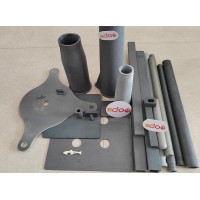
ReSiC Beams/plates/bur
$16.00 -
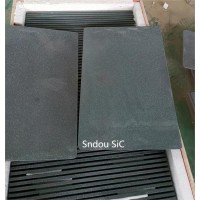
RSiC Slabs Boards Tile
$15.00 -
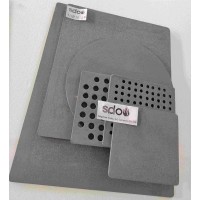
RSiC Batts as Kiln she
$15.00 -
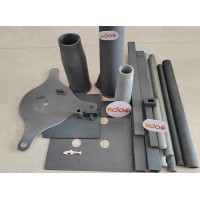
RSiC Tube by recrystal
$10.00 -
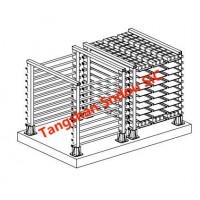
RSiC Kiln Furniture (B
$16.00 -
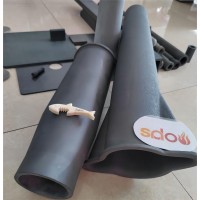
RSiC Burner Nozzle Fla
$18.00 -
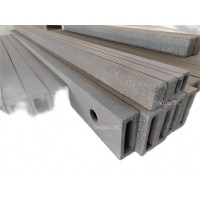
RSiC Beam Support Pill
$16.00 -
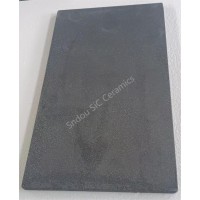
RSiC plate Slab Board
$15.00 -

NSiC Tube Pipes by Nit
Inquiry -
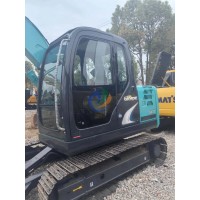
used excavator hudraul
$16600.00 -
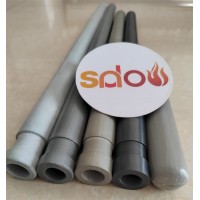
NSiC Thermocouple Prot
Inquiry -

Stalk Riser Tube for L
Inquiry -
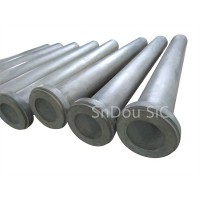
NSiC Ceramic Heater Pr
Inquiry -

RSiC NSiC Ceramic Kiln
Inquiry -
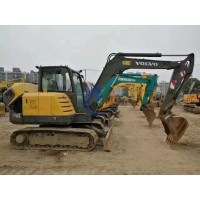
used excavator hudraul
$11500.00
Product parameters
closure
This shop is operated by agent
- Set up shop
- Authorized by Manufacturers & Suppliers online marketplace B2B platform GongWong.com, can provide agency service
- Service Introduction
- Authorized product, Internet cloud promotion service integrating certification promotion and procurement inquiry
- Intelligent website construction
- PC terminal + mobile terminal, create a cost-effective corporate website!
closure